MOLECULAR PHYSICAL CHEMISTRY

The purpose of this e-Portfolio is to apply Content and Language Integrated Learning (CLIL) to teach Molecular Physical Chemistry topics to students over the sixth semester of Environmental Chemistry program.
Here you can find the Syllabus of this academic space-time.
Here you can find the lab schedule.
Abstract sections
February 26, 2016
Purpose: Be awareness of the sections in the abstract on publications.
Activity
1. Watch the video "How to write an Abstract: Some useful tips" and raise awareness about the sections of the abstract you bring.
2. In groups, answer the next questions:
a) Does the Abstract (of the paper you bring to the class) include all the sections?
3. Highlight (with different colour) the different sections of the abstract. Discuss in class the particular structure of the abstract you choose (Related with the video).
4. Exchange your solution with other group. Evaluate your partner's work.
5. Make a mind map related with the paper (Abstract) you bring, focus on the environmental application. Present it he next class.

Relationship between State of Matter and Intermolecular Forces
February 12, 2016
Purpose: Realize the importance of Intermolecular forces in the Change State of Matter.
Activity
1. Watch the Professor Holiday picture by Cooking tamales on Christmas Eve 2015.
2. Answer the question:
-
How many state of matter are there (in the picture)?
-
How many state of matter are in the universe?
-
In terms of microscopic world (molecular level), why can the state of matter change?
-
Why the particles easy aggregate when you cool down specific substance?
3. Watch the YouTube video title “Intermolecular Forces And Phases Of Matter” by Jeffrey A Tibbitt. Watch between 1.26 to 6.06 minutes (with closed caption).
4. Screen shot the important moments of the video. Why those scenes are important?
5. In pairs discuss about:
-
What is the importance of Intermolecular Forces in the State of Matter (State of Matter Changing)?
-
Why different substance has different melting and boiling points?
6. What happend if...(Kahoot!)
Share your answer in the classroom.

Intermolecular Interactions
February 23, 2023
Purpose: Reinforce the learned concepts of Intermolecular Forces by using interactive simulations.
1. Open "Molecular Workbench" (MW) software. Click on "Browse all activities..">"Intermolecular attractions" (It is in Chemistry topic).
2. Do all "Intermolecular attraction" activities. Hand in the report.
3. In pairs discuss about:
-
How could molecular model (in MW) be created to simulate an acetic acid sorption on charcoal?
-
How could molecular model (in MW) be created to simulate a diffusion of Methylene Blue, Potassium Dichromate or Copper Sulfate?
-
Which other environmental problems could be simulated at molecular level?
Share your answer in the classroom.
4. Answer the Southeastern Louisiana University’s test about Intermolecular Forces. Show your results to the professor and discuss the answer in class.

Why proteins can be separated by electric field? - Lab
March 28, 2016
Purpose: Be aware of the importance of intermolecular interactions and molecular properties on biotechnological analysis.
In this activity you will find out the importance of intermolecular forces and molecular properties on biotechnological procedures. This time we are goingo to focus on electrophoresis.
Activity
1. Read Abstract, Introduction and 1D Electrophoresis sessions on "Overview of Protein Elec-
trophoresis", published by ThermoFisher Scientific seller.
2. Watch the video "On separating proteins by SDS-PAGE" on the same page.
3. Ask yourself the next questions:
-
Why can you separate molecules by electric field?
-
What kind of molecules can be separated?
4. Modelling. Open "electrophoresis.jnlp" by doble click on it.
Make all activities (Gel Electrophoresis) and answer the questions.
5. Answer the following questions:
-
What is the structure of SDS? Why is SDS needed to pretreat proteins in Electrophoresis technique?
-
Is it important to separate proteins in Environmental Chemistry?
-
How do you know that a patient have Sickle Cell trait? Find an article (not more than 10 years old) to support the methodology.
6. Perform activity report, remember to write the abstract (Consider "How to write an Abstract: Some useful tips")
Electrophoresis web pages:
Overview of Protein Electrophoresis by ThermoFisher Scientific
Preparing Protein Samples for Electrophoresis
System requirements:
- JAVA and JDK installed on your computer.
- PedagogicaActivities installed on your computer. Download here. Instructions are in "Read me.txt".
- Download electrophoresis.jnlp activity.

Adsorption: Alternative methods to reduce energy consumption
February 26, 2016
Purpose: Apply the concept of "Surface Phenomena" to solve industrial energy problems.
Activity
1. Watch the video "World Energy in 4 minutes" by World Energy Council.
2. In pairs, discuss the relation between World Energy used and the Global warming, by answering the followings questions:
- Why do we need additional demands side investments, innovation, incentives and stronger technical standards in the world?
- Which of the Energy Trilemma needs more attention in Colombia?
- In statistics, What is the relation between World Energy consumption and the World Industry consumption?
- What is the industrial process that uses the highest amount of energy? How can the industry be helped to reduce energy expenditure?
3. Make a mind map that explain the last answer. Present the main map to your partners.
4. Read introduction (Four beginning paragraphs) of the article "7 Ways to Purify Chemicals That Could Change the World. Separating substances without using heat would lower global energy use, emissions and pollution"
5. In pairs, select a word to express the meaning of each of the paragraphs. Discuss the words and the order in class.
Homework: In pairs, choose one of the "7 ways to purify Chemical", read it and find an article to describe a possible solution of this way. Attention: Bring the paper the next class.
Extra-time workshop
Resolve the workshop attached here. The solutions will be discussed the next class.

Is it a Ball Pool?
April 19, 2017
Purpose: Recognize the important variables on "Molecular Reactions” model.
Essential Question:
-
What happens to atoms and molecules during a chemical reaction?
-
What are the necessary conditions for reactions occur?
Activity prerequisites: Install JAVA in your PC.
Activity
Figure: "Why all reactants weren't consumed in a stoichiometric reactions?”
1. Think about it and write your ideas on a paper.
2. Download and run “Reactions & Rates” JAVA app on your PC. Distributed by PhET Interactive Simulations.
3. Game on it!
- Explore the activity and come up with ideas of what is happening on the simulation (10 minutes).
Start with “Rate Experiment” and finish with “Single Collision” tab.
4. Relate the following words to the molecular reaction model simulated in the app.
angle, all collision, potential energy, kinetic energy, temperature.
5. Could you create an equation that integrated all these variables? Try it! (Keep your equation to the next class).

The Rate Law
April 21, 2016
Purpose: Apply the Rate Law to determine the order of reaction.
Activity
1. Watch the video "Approach to Solving Math Problems" posted in the "Courses" page.
2. Read the exercise (here)
3. Do you have enough data to resolve it?
4. Plot the line regression order from 0 to 2, related to the exercise above paying special attention to the R^2 of each plot regression.
5. Keeping in mind plots, What is the reaction order?
6. How could you determine the rate of the reaction? Explain and do it!
7. Does the reaction become to the equilibrium? Explain your answer.
8. Googling "The principal atmospheric sources of ethylene" and make a short video (max. 1 min) to sensitize people around you to avoid the use of ethylene sources.
Note: If you have some doubts about how to determine an order of reaction, review four methods here.
The Rate Law II
April 21, 2016
Purpose: Raise awareness of the importance of the The Rate Law in the determination of how fast the chemical reactives are consumed and how fast chemical products are formed in a specific environmental reaction.
Activity
1. Develop a mind map about what is The Rate Law and its relations with only reaction order.
2. Watch the first 10 min of the video "The Rate Law" by Paul Andersen. Take notes.
3. Compare the author conclusions with your mind map.
4. Brief discussion over the video and your mind map.
5. Find an article about the experimental determination of Rate Law of important reaction in Environmental Chemistry. Explain to your classmates by making a video (Up to 4 min) the outcome and main findings.
Note: What analytical method was used to determine the reaction of order?
6. Evaluate the videos made by your partners, take into account the Digital video project rubric.
The best catyst ever!
February 02, 2017
Final outcome:
The students will explain the behavior and reactivity of enzyme from their structure by making a video. They will understand the laws of interaction of protein-ligand in the white biotechnology.

The best catalyst ever
January 01, 2020
Outcome:
Understand the laws of interaction of molecules at differente environmentals.
At the end of the day you explain the behavior and reactivity of enzymes from his structure
Activities you need to make to have grade:
-
Make the activities in this e-Portfolio.
-
Take part of the molecular physical chemistry classes.
-
Go to theoretical and english tutorials (Have evidence).
-
Make a video and present to your partners.
Enzyme kinetic
April 29, 2016
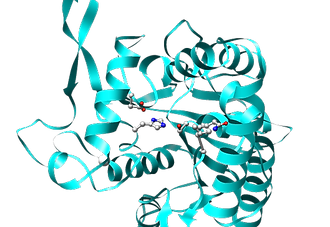
Purpose: Recognize the enzyme kinetic and the molecular insight of enzyme activity.
Rate reaction in life systems are diverse and complex. Nature provide rates in soft conditions. Almost all biological reactions are catalysed by proteins called enzyme.
Activity
1. Read the "Measuring Enzyme Behavior: The Michaelis-Menten Equation - Chapter 6. Enzyme Kinetics: Getting There Faster" on Biochemistry for Dummies (Find this book on Ebrary - University database).
2. In pairs, make a mind map related to the modification of Michaelis-Menten equation; depending on the particular conditions.
3. Read the poster "Enantioselectivity Prediction of Candida Antartica B Lipase Towards Racemic Mixture Resolution of (R/S)-propanolol" published on 13th International Bio-Tech Symposium (IBS-2008), China
4. Write the abstract.
Bibligraphy:
Enzyme Kinetic Lab
April 29, 2016
Purpose: Recognize the enzyme kinetic and the molecular insight of enzyme activity.
Rate reaction in life systems are diverse and complex. Nature provide rates in soft conditions. Almost all biological reactions are catalysed by proteins called enzyme.
Activity
1. Develop 1 to 7 steps of "Starch Hydrolysis by Amylase" activity published by Nam Sun Wang, professor of Department of Chemical & Biomolecular Engineering, University of Maryland - U.S.
Note: How to make buffer here.
2. What is the mechanism of the reaction? What is the order of reaction?
3. Make a report.

Protein in Spodoptera frugiperda brain- ENDED
May 31, 2016
Final outcome:
The students will explain the behavior and reactivity of proteins from their structure by making a video. They will understand the laws of interaction of macromolecules in different environments.
Class project: Protein expression of caterpillar Spodoptera fugiperda brain.
Videos made by students in 2016-I.
"Recycling components of Nickel-Cadmium batteries" by Astrid Carolina Carvaja.
"Extraction, separation and characterization of caterpillar (Spodoptera frugip erda) brain protein" by Natalia Niño and Katherine Vega.
"Brain protein extraction in Spodoptera frugiperda" by Victor Jaramillo and Laura Quiroga.

Sorption of carbametes on tomato plantation - ENDED
August 31, 2017
Final outcome:
The students will explain the behavior and sorption of carbamates on tomato platation by making a video. They will understand the laws of interaction of macromolecules in different environments.
Class project: Carbamates (Mancozeb) determination in tomato leaves.